
Like children’s fairy tales, foreign policy myths are created, told and retold for a purpose.
The Boy Who Cried Wolf imparts a life lesson while entertaining your five year-old niece. Unfortunately foreign policy myths are seldom so benign.
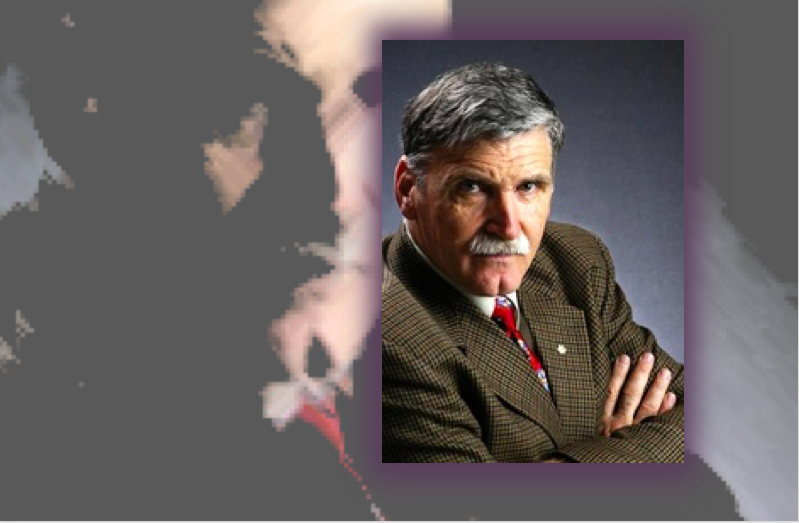
The tale told about Romeo Dallaire illustrates the problem. While the former Canadian General rose to prominence after participating in a failed (assuming the purpose was as stated) international military mission, he’s widely considered a great humanitarian. But, the former Senator’s public persona is based on an extremely one-sided media account of his role in the complex tragedy that engulfed Rwanda and Burundi two decades ago.
In a particularly egregious example of media bias, criticism of Dallaire’s actions in Rwanda have been almost entirely ignored even though his commander published a book criticizing the Canadian general’s bias. According to numerous accounts, including his civilian commander on the UN mission, Dallaire aided the Rwandan Patriotic Front (RPF), which invaded Rwanda with decisive Ugandan support and quiet US backing. Gilbert Ngijo, political assistant to the civilian commander of United Nations Assistance Mission for Rwanda (UNAMIR), summarizes the criticism: “He [Dallaire] let the RPF get arms. He allowed UNAMIR troops to train RPF soldiers. United Nations troops provided the logistics for the RPF. They even fed them.”
In his 2005 book Le Patron de Dallaire Parle (The Boss of Dallaire Speaks), Jacques-Roger Booh Booh, a former Cameroon foreign minister and overall head of UNAMIR, claims Dallaire had little interest in the violence unleashed by the RPF despite reports of summary executions in areas controlled by them. RPF soldiers were regularly seen in Dallaire’s office, with the Canadian commander describing the Rwandan army’s position in Kigali. This prompted Booh Booh to wonder if Dallaire “also shared UNAMIR military secrets with the RPF when he invited them to work in his offices.”
Finally, Booh Booh says Dallaire turned a blind eye to RPF weapons coming across the border from Uganda and he believes the UN forces may have even transported weapons directly to the RPF. Dallaire, Booh Booh concludes, “abandoned his role as head of the military to play a political role. He violated the neutrality principle of UNAMIR by becoming an objective ally of one of the parties in the conflict.”
Dallaire doesn’t deny his admiration for RPF leader Paul Kagame who was likely responsible for shooting down the plane carrying both Rwandan Hutu President Juvénal Habyarimana and Burundian President Cyprien Ntaryamira on April 6, 1994. (That event triggered mass killing and an environment of deep instability that facilitated the RPF’s rise to power in Kigali.) In Shake Hands with the Devil, published several years after Kagame unleashed terror in the Congo that’s left millions dead, Dallaire wrote: “My guys and the RPF soldiers had a good time together” at a small cantina. Dallaire then explained: “It had been amazing to see Kagame with his guard down for a couple of hours, to glimpse the passion that drove this extraordinary man.”
Dallaire’s interaction with the RPF was certainly not in the spirit of UN guidelines that called on staff to avoid close ties to individuals, organizations, parties or factions of a conflict.
A witness at the International Criminal Tribunal for Rwanda (ICTR) actually accused Dallaire of complicity in a massacre. A Rwandan national testifying under the pseudonym T04, reported Tanzania’s Arusha Times, “alleged that in April 1994, Gen. Dallaire allowed members of the rebel Rwandese Patriotic Front (RPF, now in power in Kigali), to enter the national stadium and organize massacres of Hutus. Several people, including the witness, took refuge there following the assassination of Rwandan President Juvenal Habyarimana.”
But, criticisms of Dallaire’s actions in Rwanda have been almost entirely ignored by the Canadian media. Le Patron de Dallaire Parle went largely unnoticed, or at least not commented upon. A Canadian newswire search found three mentions of the book (a National Post review headlined “Allegations called ‘ridiculous’: UN boss attacks general,” an Ottawa Citizen piece headlined “There are many sides to the Rwanda saga” and a letter by an associate of Dallaire).
Other critical assessments of Dallaire’s actions in Rwanda have fared no better, including Rwanda and the New Scramble for Africa and Enduring Lies: The Rwandan Genocide in the Propaganda System, 20 Years Later in which Edward Herman and David Peterson “suggest that Dallaire should be regarded as a war criminal for positively facilitating the actual mass killings of April-July, rather than taken as a hero for giving allegedly disregarded warnings that might have stopped them.”
On the other hand, a Canadian newswire search of “Romeo Dallaire Rwanda” elicited over 6,000 articles that generally provide a positive portrayal of Dallaire. Similarly, a search for mention of Dallaire’s 2003 book Shake Hands with the Devil elicited 1,700 articles.
The complex interplay of ethnic, class and regional politics, as well as international pressures, which spurred the “Rwandan Genocide” has been decontextualized. Instead of discussing Uganda’s aggression against its much smaller neighbour, the flight of Hutus into Rwanda after the violent 1993 Tutsi coup in Burundi and economic reforms imposed on the country from abroad, the media focuses on a simplistic narrative of vengeful Hutus killing Tutsis. In this media fairy tale, Dallaire plays the great Canadian who attempted to save Africans.
While two decades old, the distortion of the Rwandan tragedy continues to have political impacts today. It has given ideological cover to dictator Paul Kagame’s repeated invasions of the Congo and domestic repression. In addition, this foreign policy myth has been used to justify foreign military intervention as is the case with the current political crisis in Burundi. The myth of Dallaire in Rwanda is also cited to rationalize the Responsibility to Protect doctrine, when in fact the true story illustrates the inevitable duplicitousness of foreign interventions.
Unlike in bedtime stories, in foreign policy making things up is usually harmful.
Yves Engler is a Montreal writer and political activist. This post was originally published on Yves Engler’s website.


![David Bush and Valerie Lannon on the Green New Deal and the socialist case against the carbon tax [video]](https://newnbmedia.mydev.ca/wp-content/uploads/2020/11/carbon-tax-1200x600-1-350x250.jpg)
