• About
  • Join/Donate
  • Contact
Thursday, November 5, 2026
  • Login
No Result
View All Result
The Brief
NB MEDIA CO-OP
Share a story
  • New Brunswick
  • Canada
  • World
  • Environment
  • Indigenous
  • Labour
  • Gender
  • Politics
  • Arts & Culture
  • Videos
  • COVID-19
  • New Brunswick
  • Canada
  • World
  • Environment
  • Indigenous
  • Labour
  • Gender
  • Politics
  • Arts & Culture
  • Videos
  • COVID-19
No Result
View All Result
NB MEDIA CO-OP
No Result
View All Result
Home Arts & Culture

Book Review: Journeys Through Eastern Old-Growth Forests a narrative guide by Jamie Simpson

by Bob Bancroft
July 29, 2014
Reading Time: 2min read

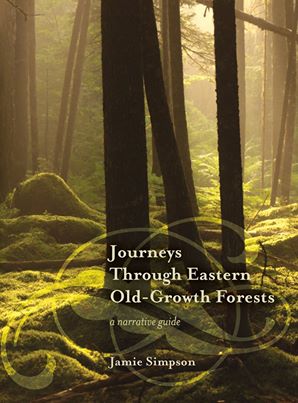
Simpson_bookJamie Simpson’s second book takes readers on a series of excursions to 17 old-growth forests that remain in New Brunswick, Nova Scotia and Prince Edward Island. The sites have varying, well-profiled Acadian forest attributes that Simpson neatly fits into a wider picture of ecologically-healthy forest functions. Sufficient directions are given for readers to visit these places. At face value, that’s the book. Dig deeper and one finds ecological undertones that may well make this a forest classic.


Simpson’s writing style seems simple and conversational. He applies science in such a manner that most folks will understand, but few will notice that it is science. A turn in a trail, a stroke of the paddle, or an encounter with one of nature’s facets can be a launching pad for investigating aspects of the Acadian forest ecosystem. In keeping with Aldo Leopold’s thought (I paraphrase) that the first rule of intelligent tinkering should be to save all the pieces, Simpson examines piece after piece, offering hints of position and function within nature’s real estate. His presentation slips together a gradual accumulation of science into the forest forays that assemble as pieces of an ecological jigsaw puzzle.

The contrasts between old growth forests and degraded forest sites and soils that remain after hundreds of years of excessive plundering by single-purpose companies are well documented. The stark realities of current clearcutting practices on forest landscapes are described in Chapter 5. Simpson has blunt assessments concerning the lack of political will and an absence of long-term foresight to halt this forest degradation. He aptly corners the jobs-versus-environment attitudes that are rampant politically. Simpson enlists provocative quotes from forest ecologists like Bernd Heinrich, who defines tree plantations as “permanent deforestation.”

This book will interest people who like woodlands and sense that clearcuts are too drastic, but lack the scientific understanding to back up their hunch. Like the tobacco lobby, forest science has its share of industry-funded academics who blur realities and pounce upon any who question the ecological ramifications of clearcutting. The forest sites left after private profiteering efforts in this book serve as stark contrast to Simpson’s old growth journeys.

Journeys Through Eastern Old-Growth Forests should prompt woodland owners to consider the original forest composition on their property, and to begin using a forest ecosystem classification approach in their forest management. With this book Simpson makes a solid case that working with rather than overwhelming nature would bring better dividends to all species who depend on eastern forests.

Bob Bancroft is a biologist, conservationist and writer based in Pomquet, Nova Scotia. He has served as the Chair of the NS Section of the Canadian Institute of Forestry and as the President of the Nova Forest Alliance. Bancroft published “Wild Nova Scotia” in 2007.

Tags: Bob BancroftenvironmentforestJamie SimpsonNova Scotia
ShareTweetSend

Related Posts

Tertulia – David Bedford on the Marshall Decision Two Decades Later: Emancipation as Oppression [video]
Canada

Tertulia – David Bedford on the Marshall Decision Two Decades Later: Emancipation as Oppression [video]

November 23, 2020

David Bedford delivered the talk, "The Marshall Decision Two Decades Later: Emancipation as Oppression," online on Nov. 19. In this...

DFO is taking Mi’kmaw fishers’ traps in St. Peter’s Bay, Unama’ki (Cape Breton, NS)
*Opinion*

DFO is taking Mi’kmaw fishers’ traps in St. Peter’s Bay, Unama’ki (Cape Breton, NS)

November 5, 2020

In mid-October, the Department of Fisheries and Oceans (DFO) seized around 200 lobster traps from Mi’kmaw fishers in Unama’ki (Cape...

Bob Bancroft: Where have all the good forests gone? [video]
Environment

Bob Bancroft: Where have all the good forests gone? [video]

October 24, 2020

Bob Bancroft, a wildlife biologist and the president of Nature Nova Scotia, delivered the talk, “Where have all the good...

Trapped in conflict: How the corporate megafishery Clearwater, headed by one of Nova Scotia’s richest billionaires, has set the stage for violent conflict in Mi’kma’ki
Canada

Trapped in conflict: How the corporate megafishery Clearwater, headed by one of Nova Scotia’s richest billionaires, has set the stage for violent conflict in Mi’kma’ki

October 17, 2020

En français : Conflit violent en Mi’kma’ki: comment la méga-pêche d’un milliardaire de Nouvelle-Écosse a préparé le terrain. Again today,...

Load More

Recommended

No Content Available
NB Media Co-op

© 2019 NB Media Co-op. All rights reserved.

Navigate Site

  • About
  • Join/Donate
  • Contact
  • Share a Story
  • Calendar
  • Archives

Follow Us

No Result
View All Result
  • About
  • Join/Donate
  • Contact
  • Share a Story
  • COVID-19
  • Videos
  • New Brunswick
  • Canada
  • World
  • Arts & Culture
  • Environment
  • Indigenous
  • Labour
  • Politics
  • Rural

© 2019 NB Media Co-op. All rights reserved.

Welcome Back!

Login to your account below

Forgotten Password?

Create New Account!

Fill the forms below to register

All fields are required. Log In

Retrieve your password

Please enter your username or email address to reset your password.

Log In