
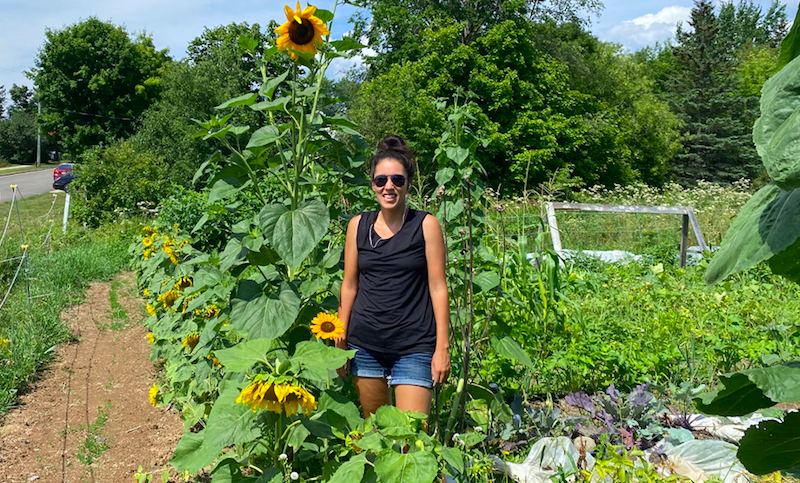
A partnership between the Joint Economic Development Initiative (JEDI) and Hayes Farm resulted in bursaries this year for two Indigenous applicants to participate in the Regenerative Farming Certificate (RFC) program at Hayes.
The 18-week Hayes Farm program provides a hands-on learning experience that aims to inspire and mobilize New Brunswickers toward a resilient and thriving food system. Hayes Farm is committed to doing this in the spirit of honouring Indigenous culture and food ways, while using integrative principles of land-based learning and reconnection.
JEDI is an Indigenous organization working with partners to foster Indigenous economic development in New Brunswick.
Sierra Peter-Paul and Louis-Xavier Aubin-Bérubé were awarded with JEDI bursaries to participate in the Hayes Farm program this summer. As the summer comes to a close, Peter-Paul and Aubin-Berube reflect on their experience at Hayes Farm, and what it has meant to them.
Sierra Peter-Paul is from St. Mary’s First Nation, and saw the program at Hayes Farm as a great opportunity to learn more about growing food. She and her husband had begun gardening and taking steps to become more sustainable, but this program felt like the perfect opportunity to dive deeper into farming.
Peter-Paul is also studying with the Maliseet immersion program where she learns about her culture and traditions. She has been able to connect her knowledge from the immersion program with her experience working at Hayes Farm.
“A lot of it goes back to being land-based. We lived off the land, we are people of the land and of the river. I wanted to find a way to connect back to the Earth, and I found that through farming, gardening and growing food,” she said.
As well, she noted that having Indigenous teachers come share their knowledge with the RFC participants has been very meaningful, because much of that knowledge is difficult to find. She hopes to share the knowledge she has learned with others in her life, and hopefully pass it along to her children.
Peter-Paul said that the learning experience has helped on her journey to reconnect with the land, while gaining a new perspective of the earth. She has also developed a deeper understanding of food sovereignty and the hurdles we must overcome to achieve it.
“It’s not just an overnight thing that can be fixed, it requires a whole shift in the way society is run, and a shift in the way we think about food and where it comes from. Taking this program has humbled me, it has shown me how much work is needed for our world and our people to achieve food sovereignty.”
Aubin-Bérubé moved from Quebec to New Brunswick this year to participate in a Wolastoqey language course offered in Fredericton. It was here that he first heard about the RFC program at Hayes Farm.
He decided to apply because he had always been interested in growing food, but never had an opportunity to learn in this capacity before.
The Maliseet community in Quebec doesn’t have a reserve because it had been sold years ago, so everyone is dispersed between Maine, New Brunswick and Quebec.
“I lived in Odanak, which is an Abenaki community, and went to school with Indigenous peoples from Quebec, but most were not Maliseet related. I always felt like I was missing something, so I am really happy to be in New Brunswick,” he said.
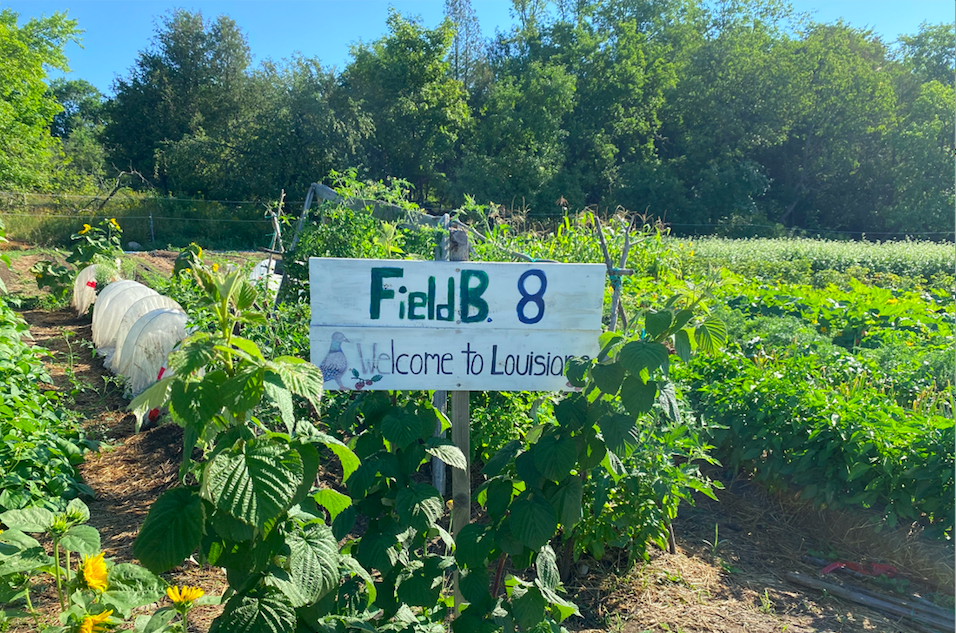
Hayes Farm is located on traditional Wolastoqey territory – Aubin-Berube is Wolastoqewi and said coming here has helped him feel a stronger connection to his own culture and community.
“It’s inspiring to be growing and learning on traditional Wolastoqey territory. We learn about the past and how our ancestors used to survive – it’s just so amazing, all the skills and knowledge we are learning,” Aubin-Bérubé said.
Once the program is complete, he hopes to grow his own food and share his knowledge with others. Learning to grow food has helped him recognize the importance of food security, and the fragility of our current food system.
“Everything we eat is dependent on someone else, and dependent on a system. If that system were to collapse, we are left in a bad situation,” he said.
His connection to food has grown throughout the summer, especially since the RFC participants are responsible for their own field area. Having that responsibility over part of the farm, caring for it and watching it grow, has helped him connect with and appreciate food more.
The RFC program has pushed participants to work hard and get their hands dirty. Peter-Paul said even though the work is difficult, the outcome makes it worthwhile. Farming can be extremely rewarding, bringing a sense of completeness and accomplishment.
Hannah Moore is a recent graduate from St. Thomas University, currently working as a Food Security and Regenerative Farming Reporter for the RAVEN project at the University of New Brunswick.


